Japandi Living Room Style, 9 Amazon Pieces Under $1,800
The most beautiful rooms are often the ones with the least in them.
Japandi is one of those design philosophies that sounds like a trend but feels like a truth.
It’s the meeting point between Japanese minimalism and Scandinavian warmth — two design traditions that share a deep respect for natural materials, honest craftsmanship and the idea that a room should contain only what genuinely belongs there. The result is spaces that feel simultaneously serene and deeply liveable. Not cold. Not sparse. Just unhurried.
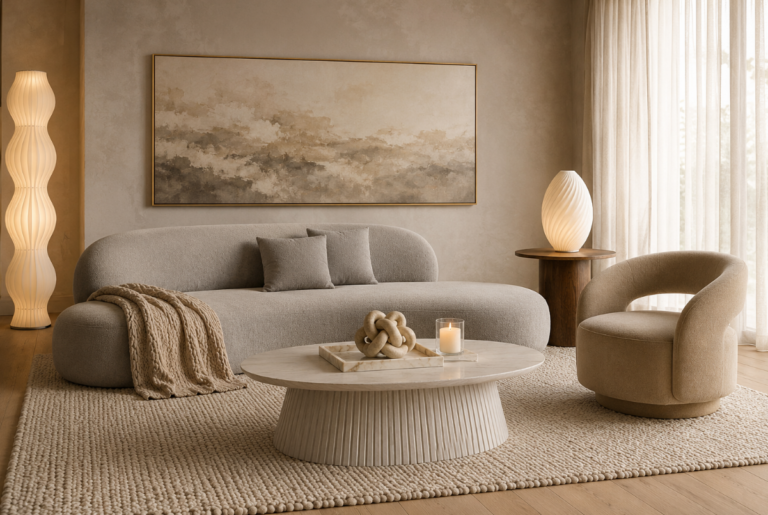
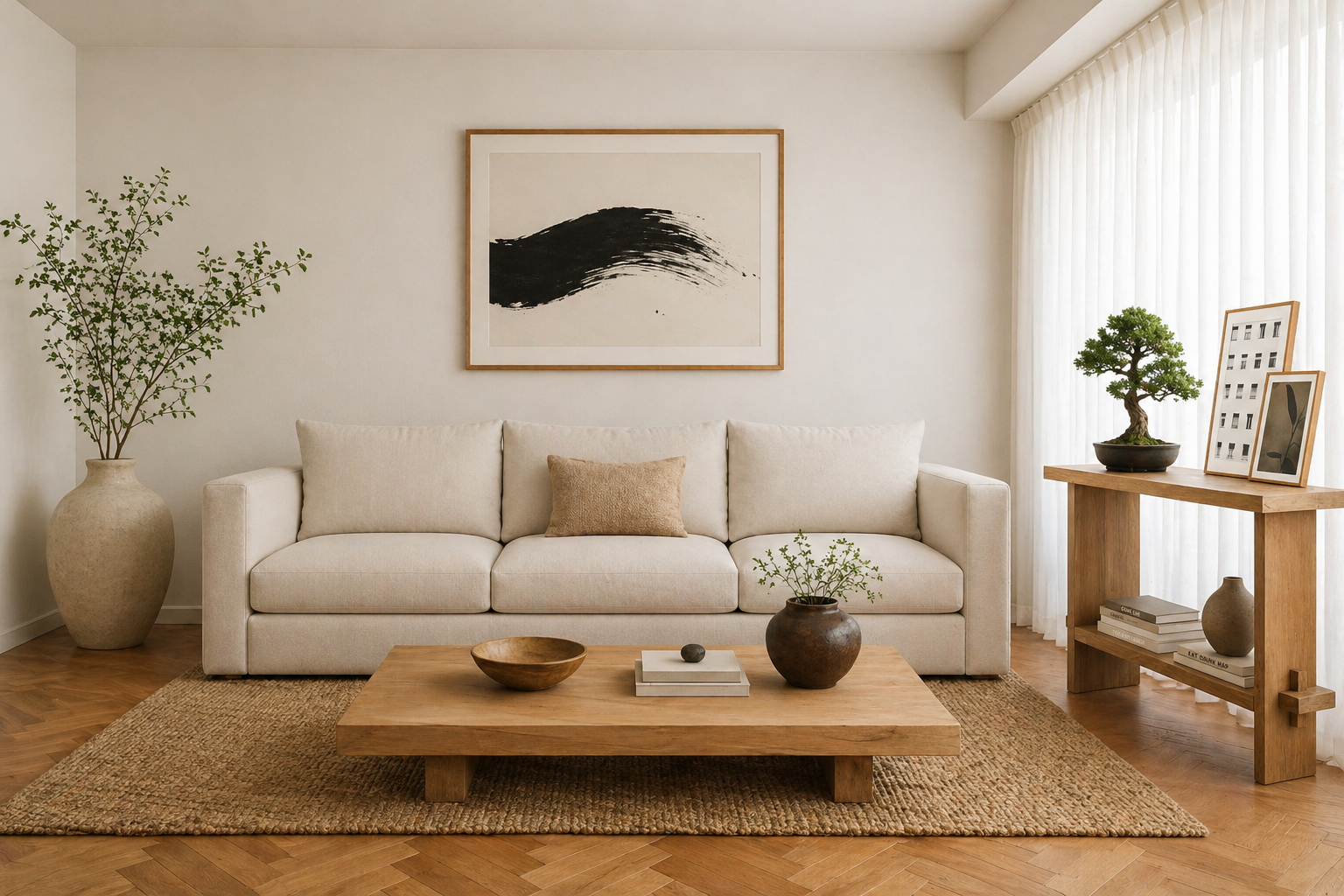
This room is a study in restraint done right. Warm white walls with no color to compete with. A cream sofa with clean, simple lines that asks nothing of you except to sit down. A low profile oak coffee table that sits close to the ground the way Japanese furniture has for centuries. A single brushstroke painting that says more with one mark than a gallery wall says with twenty pieces.
Every object in this room has earned its place. The large ceramic floor vase adds sculptural height without visual noise. The bonsai on the console shelf brings in the organic quality that stops minimalism from feeling clinical. The wooden bowl on the coffee table gives your hands something to reach for. Nothing here is accidental and nothing here is excessive.
What makes this palette genuinely achievable is that warm white is one of the most forgiving wall colors in existence. It works in any light, at any time of day, with any natural material you put against it. The natural oak tones of the coffee table, console and floors create a warmth that stops the white from feeling sterile. This is a room that photographs beautifully and feels even better to actually be in.
Every piece is from Amazon. Here is the full breakdown.
Affiliate Disclosure: Cozy Spaces Collective is a participant in the Amazon Services LLC Associates Program. This means I earn a small commission if you purchase through my links, at no extra cost to you.
Cream Chenille Sofa — $649.00

The sofa is the most important decision in any living room and in a Japandi space the brief is specific: clean lines, neutral tone, no ornamentation. This cream chenille three seater hits every requirement. The simple square profile has no fussy details competing for attention, the warm cream tone sits beautifully against warm white walls, and the chenille fabric adds just enough texture to keep the room from feeling flat.
The removable cushion covers are a practical detail worth noting in a room this light and this carefully considered. A sofa you’re afraid to use defeats the entire purpose of Japandi design, which is fundamentally about creating spaces that support real life. At $649 for a sofa this well proportioned and this carefully designed it represents genuine value in a category where quality usually costs significantly more.
Low Profile Oak Coffee Table — $299.00

The low profile coffee table is one of the most distinctly Japandi pieces in this room and one of the hardest to find done well. Japanese interior design has always favored furniture that sits close to the ground, creating a sense of visual calm and spatial generosity that standard height tables simply cannot replicate. The room feels more open, more intentional and more serene with a table at this height.
The solid oak construction and the natural finish are doing exactly the right thing: adding warmth and organic texture without any decorative embellishment. The thick legs and platform base give it a sculptural quality that makes it feel like a considered design object rather than just a functional surface. Styled with the wooden bowl, a small stack of books and the dark ceramic vase it becomes the visual anchor of the entire seating area.
Jute Area Rug — $212.00

In a room this restrained every material choice carries additional weight and the jute rug is no exception. It grounds the seating area with a layer of natural texture that connects the space to something earthy and organic, which is fundamental to Japandi’s design philosophy. The warm natural tone of the jute bridges the cream sofa and the oak coffee table, creating a visual continuity at floor level that makes the room feel like a single cohesive decision.
Jute is also one of the most authentically natural flooring materials available, which matters in a design tradition that values honest materials above all else. The hand braided texture adds visual interest without pattern or color, which is precisely what this room needs. At $212 it is the foundation piece that everything else sits on, literally and visually.
Large Ceramic Floor Vase — $104.99

The large floor vase in the left corner is the piece that gives the room its sense of scale and its most distinctly Japanese quality. In Japanese interior design, a single large ceramic object placed with intention carries more visual weight and meaning than a dozen smaller decorative pieces. This vase is doing exactly that work, adding height and sculptural presence to the corner without adding color or visual noise.
The matte finish and organic form are precisely right for this aesthetic. Fill it with bare branches, dried pampas grass or simple green stems and it becomes an entirely different object depending on the season and your mood. Empty it reads as pure sculpture. At $105 for a piece this size and this quality it is exceptional value and it will anchor any room you put it in.
Brushstroke Wall Art — $169.99

The brushstroke painting above the sofa is the room’s single most important design statement and the piece that most clearly announces the Japandi aesthetic to anyone who walks in. Japanese ink painting has a centuries long tradition of finding maximum expression in minimum strokes, and a large format brushstroke print brings that tradition into a contemporary living room in a way that feels completely natural rather than affected.
The natural wood frame is as important as the print itself. It adds warmth and connects the art to the other oak elements in the room, the coffee table and the console shelf, creating a material continuity that makes the art feel integrated into the room rather than hung on top of it. Centered above the sofa at the correct height it becomes the visual anchor that the entire room orients around.
Faux Bonsai Tree — $84.99
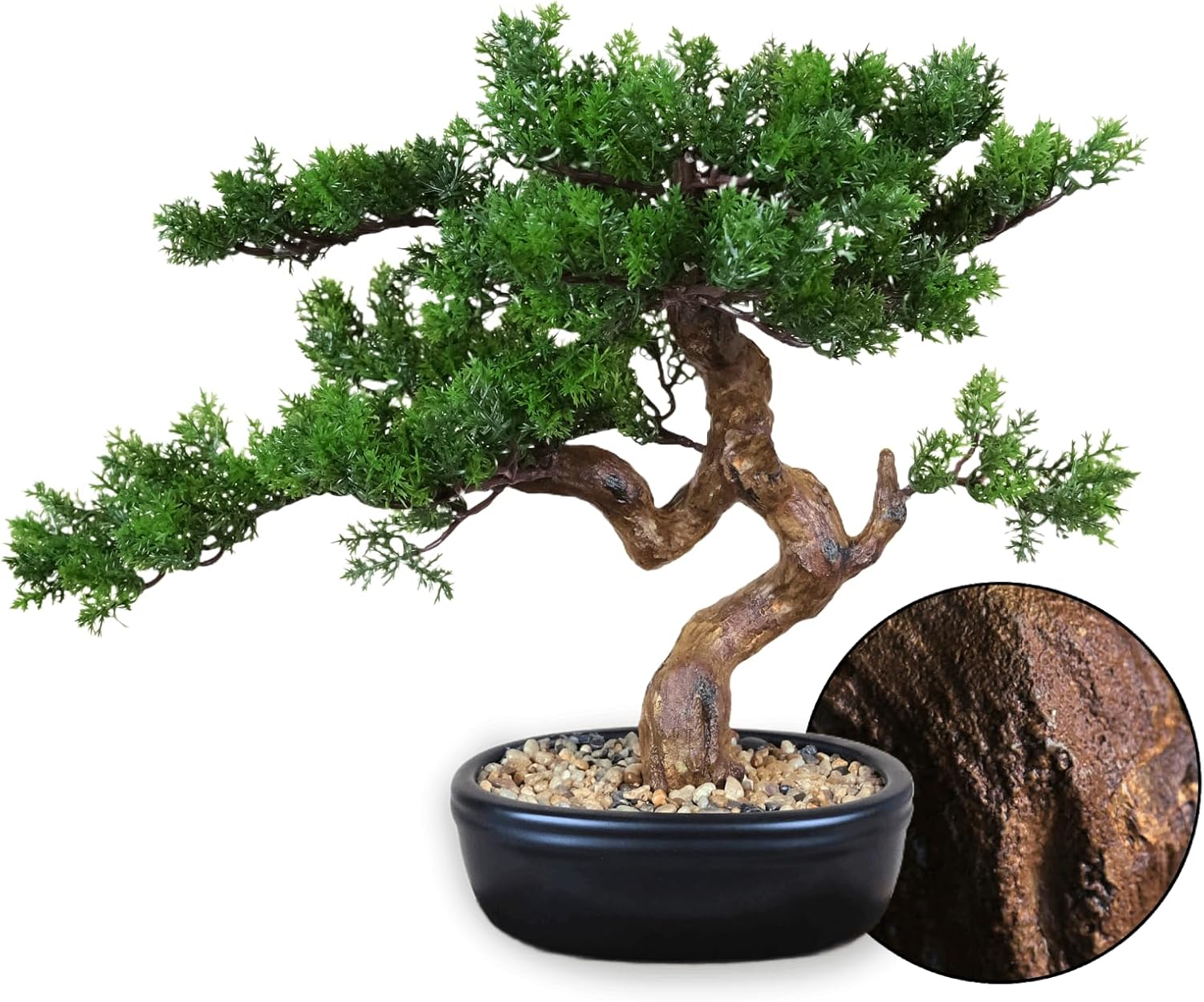
A bonsai is perhaps the most culturally specific element in a Japandi room and also the most immediately recognizable. The practice of bonsai cultivation is fundamentally about patience, intentionality and finding beauty in constraint, which is precisely the philosophy that Japandi design embodies. A bonsai on the console shelf communicates all of that without a single word.
A faux bonsai gives you all of this with none of the considerable skill and attention that real bonsai cultivation requires. The sculptural quality of the twisted trunk and the carefully shaped canopy read as genuinely organic even up close, and the ceramic pot it comes in is a design object in its own right. At $85 it is one of the most character-defining pieces on this list at one of the more accessible price points.
Natural Wood Console Shelf — $199.73

The console shelf is the piece that gives the room its secondary focal point and stops the right side of the space from feeling unresolved. The arched cutout details in the mango wood frame are an inspired design choice, adding visual interest and a slightly organic quality that bridges the hard lines of the sofa and the soft curves of the ceramic vase. It is simultaneously functional and beautiful.
Styled with the bonsai on top, a small stack of books on the lower shelf and a simple ceramic object for balance, it becomes a properly curated vignette that rewards looking at. The natural mango wood tone sits in perfect harmony with the oak coffee table and the jute rug, reinforcing the room’s warm, natural material palette. At $199 it delivers a visual impact well beyond its price.
Shop Console Shelf on Amazon →
Textured Neutral Throw Pillow — $17.99

In a room with this much restraint the pillow is doing precise and important work. One single textured pillow centered on the sofa adds just enough warmth and human softness to stop the room from feeling like a showroom without adding any visual complexity that would disrupt the serenity of the space. The warm neutral tone sits within the palette without announcing itself.
The texture is the key detail. A smooth, flat pillow would read as an afterthought. This chenille texture adds a tactile richness that makes the sofa look genuinely comfortable and inviting, which matters enormously in a design philosophy that is fundamentally about creating spaces that feel good to actually inhabit. At $18 it is the most affordable piece on this list and one of the most important.
Wooden Decorative Bowl — $34.99

The wooden bowl on the coffee table is the smallest piece on this list and one of the most considered. In Japandi design the objects you choose to place on a surface are not accessories, they are statements. A hand turned wooden bowl communicates craftsmanship, warmth and a deep appreciation for natural materials in the way that a mass produced decorative object simply cannot.
Left empty it reads as pure form, the curve of the wood grain and the simple circular shape doing all the work. Filled with a few smooth stones, dried flowers or seasonal objects it becomes a living, changing element of the room’s composition. At $35 it is the finishing touch that completes the coffee table vignette and signals to anyone who looks closely that everything in this room was chosen with genuine intention.
Full room total: $1,772.68 — every piece from Amazon.
Full Room Budget Breakdown
| Item | Price |
|---|---|
| Cream Chenille Sofa | $649.00 |
| Low Profile Oak Coffee Table | $299.00 |
| Jute Area Rug | $212.00 |
| Large Ceramic Floor Vase | $104.99 |
| Brushstroke Wall Art | $169.99 |
| Faux Bonsai Tree | $84.99 |
| Natural Wood Console Shelf | $199.73 |
| Textured Neutral Throw Pillow | $17.99 |
| Wooden Decorative Bowl | $34.99 |
| Total | $1,772.68 |
The Paint Color
The warm white walls are the foundation everything else is built on. Here are some great options to get this look:
- Sherwin Williams Alabaster SW 7008 — one of the most popular warm whites in interior design and the closest match to what you see in this room. Slightly creamy with warm undertones that stop it from reading as cold or clinical. Works beautifully in any light condition.
- Benjamin Moore White Dove OC-17 — a softer, slightly cooler warm white that works particularly well in rooms with abundant natural light. One of the most consistently beautiful whites available.
- Behr Polar Bear 75 — the most accessible option, available at Home Depot. A clean warm white with very subtle cream undertones. An excellent starting point if you want to test the palette before committing to a premium paint.
Test any warm white on a large section of wall in your specific room before committing. The quality and direction of your natural light will affect how the color reads significantly.
How To Style This Room
Embrace negative space. The most counterintuitive principle in Japandi design is that the empty areas of a room are as important as the filled ones. Resist the urge to add more pieces, more accessories, more art. The breathing room between objects is what creates the sense of calm that makes this aesthetic so compelling. If a surface feels bare, sit with it for a few days before adding anything to it.
Choose natural materials exclusively. Every single material in this room came from the earth in an obvious, honest way. Wood, ceramic, jute, linen. Avoid synthetic materials, chrome, lacquered finishes and anything that looks manufactured rather than made. The material consistency is what creates the room’s sense of harmony and authenticity.
Style the coffee table with exactly three objects. The Japandi coffee table vignette has a precise formula: one tall object (the ceramic vase with stems), one flat object (a small stack of two books), one small grounding object (the wooden bowl). This triangle of objects at different heights creates visual balance without visual noise. Add nothing else.
Place the floor vase at a precise distance from the sofa. In the room image the large ceramic vase sits at the left end of the sofa with roughly one foot of space between them. This deliberate placement makes both objects read more clearly and stops the vase from disappearing against the sofa. Proximity matters in minimalist design.
Let the light do the work. Sheer curtains on a large window are one of the most effective tools in a Japandi room. The diffused natural light they create is soft, warm and atmospheric in a way that electric light cannot fully replicate. Keep your window treatments as minimal and as light as possible and let the natural light change the room throughout the day.
Frequently Asked Questions
What exactly is Japandi style?
Japandi is a design philosophy that combines Japanese minimalism with Scandinavian warmth. Japanese design contributes the principles of wabi-sabi (finding beauty in imperfection and impermanence), negative space and deep respect for natural materials. Scandinavian design contributes hygge (the quality of coziness and comfortable conviviality), warm neutrals and the idea that beautiful design should be accessible and functional. The result is spaces that feel simultaneously serene, warm and deliberately unhurried.
Is Japandi style hard to maintain? Won’t it always look messy in real life?
Japandi is actually easier to maintain than more maximalist styles precisely because there is less in the room to get out of order. The key is having designated places for everything that belongs in the space and being intentional about what you allow into the room in the first place. Clutter in a Japandi room is immediately visible, which is part of what motivates you to keep it clear. Most people find that living in a Japandi space gradually changes their relationship with objects and consumption in genuinely positive ways.
Can Japandi work in a small living room?
Japandi works particularly well in small spaces because the low profile furniture, the restrained palette and the commitment to negative space all make rooms feel significantly larger than they are. The low coffee table is especially effective in small rooms, as it keeps the sightlines open and the room feeling airy. A small Japandi living room often feels more spacious and more comfortable than a similarly sized room filled with more furniture and more color.
Where To Start If You Are On A Budget
Japandi is actually one of the more budget-friendly aesthetics to build gradually because the philosophy rewards having fewer, better things rather than more things. Every piece you add should feel like it belongs completely.
Start with the textured throw pillow ($17.99) and the wooden decorative bowl ($34.99). Under $55 combined and both will immediately shift how your existing sofa and coffee table feel. Then add the faux bonsai ($84.99) for that distinctly Japandi organic quality. Those three pieces together cost under $140 and will make a real, visible difference.
Save for the brushstroke wall art as your next investment — it is the piece that most clearly announces the aesthetic and makes the room feel intentional. Then the sofa and coffee table when you are ready for the full transformation. Add the floor vase and console shelf last to complete the room’s spatial story.
More Room Inspiration
If you love the natural, organic quality of this Japandi room you might also enjoy these:
- Sage Green Living Room Transformation, 9 Amazon Pieces Under $1,800
- Warm Terracotta Living Room, 9 Amazon Pieces Under $1,700
- Dusty Rose Living Room Makeover, 9 Amazon Pieces Under $1,400
Affiliate Disclosure: Cozy Spaces Collective is a participant in the Amazon Services LLC Associates Program, an affiliate advertising program designed to provide a means for sites to earn advertising fees by advertising and linking to Amazon.com. I earn a small commission if you purchase through my links at no extra cost to you. I only share products I genuinely love and would style in my own home.